
What You Need to Know About Lipedema
Lipedema is not the same as obesity.
Lipedema is a chronic condition presenting as symmetrical buildup of adipose (fat) tissue mainly in the legs. The buildup of adipose tissues can also be seen in the hips and arms, but the hands and feet are not affected.
Even though it’s estimated that around 11% of cis women have lipedema, there is not a lot of awareness about lipedema, few treatments are research-backed, and finding a provider who is knowledgeable about lipedema can be difficult. Unfortunately, because of these factors, many people are told to “just diet and exercise” which does not cure this condition.
Lipedema occurs predominately in cis women and onset is most commonly around times of hormonal changes like puberty, pregnancy, and menopause. The exact causes of lipedema are not known, but factors may include hormones, genetics, inflammation, metabolism, and abnormalities within the lymphatic system.
Symptoms can include pain, swelling, easy bruising, a change in skin texture (it can look and feel lumpy), and fatigue. The severity of these symptoms can range from none to severe and they can be constant or come and go.
Lipedema is NOT obesity. The adipose tissue associated with obesity occurs throughout the body, whereas the adipose tissue associated with lipedema occurs in the limbs (mainly the legs). The feet and hands are not affected.
Lipedema is NOT lymphedema. However, research shows that people with lipidema have an impaired lymphatic system that cannot transport lymph fluid effectively. This worsens with advanced stages of lipidema.
Stages of Lipedema
Stage 1: Generally smooth and even skin surface with enlarged fat tissue, and swelling can come and go
Stage 2: Uneven skin pattern with indentations and dimpling in the skin, and development of lipomas (a fatty lump of tissue under the skin)
Stage 3: Large adipose tissue growths causing deformity of the thighs and around the knees
Stage 4: Lipolymphedema which means both lipidema and lymhedema are present. Typically there are also large overhangs of tissue on the arms and/or legs called lobules
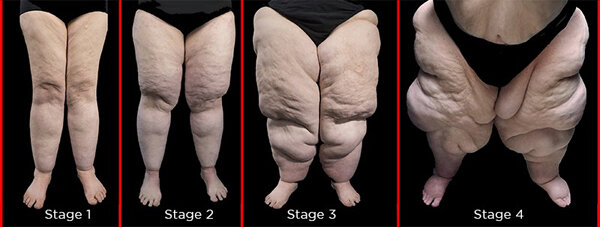
Stages of lipedema. Photo credit: Lymphatic Education & Research Network
Treatment for Lipedema
Lipedema is treated by focusing on improving lymphatic flow, managing pain, reducing inflammation, and improving function (like walking, bending, and lifting). A recent study found that people who participated in Complete Decongestive Therapy (CDT) plus exercise had significantly more improvement in reducing limb volumes, reducing pain, and improving physical function compared to using a intermittent pneumatic compression pump with exercise or exercise alone. To learn more about CDT, my blog post, “What You Need to Know About Treating Your Lymphedema” outlines what it consists of.
A certified lymphedema therapists (CLT) is the perfect provider to evaluate and treat lipedema. These therapists have the training to differentiate between lymphedema, lipedema, and other types of swelling, and can work with you on your journey to better manage this chronic condition. My blog post, "What is Lymphedema?" has several resources for finding a local lymphedema therapist near you.
Lifestyle Considerations
Optimize your nutrition habits. Nutrition suggestions for lipidema vary, so work with a dietician to see if any of the following researched diets may be right for you: paleo, keto, RAD (rare adipose disorders) diet, low-carb, high-fat eating plan, or LCHF (low carb, high fat) diet. Remember: reducing calories does not reduce lipedema fat!
Consistent physical activity and exercise are a must. Walking, cycling, yoga, exercising in the pool, and weight/resistance training are all great options to start getting the lymphatic system moving more.
Lymphatic System Stimulation
Manual lymphatic drainage (MLD): A specialized hands-on, gentle manual technique that assists with moving the lymphatic fluid out and away from the affected body part. This is performed by a lymphedema therapist and can be taught to you so you can perform it at home.
Intermittent pneumatic compression pump: These devices are also known simply as “pumps” and help to move the lymphatic fluid out from the affected limbs. These are sometimes used in place of or in conjunction with MLD.
Compression
Compression bandaging: This uses multiple layers of materials on the limbs to help reduce swelling.
Compression garments: Since the tissues affected by lipidema are sensitive, many people benefit from lighter graduated compression garments. To best manage swelling in the legs, thigh-high compression stockings or pantyhose compression garments are recommended. If the arms are affected, then a compression sleeve from your wrist to the top of your arm is recommended. But don’t just go to the store and buy compression garments! Get measured and fitted for the appropriate medical-grade garments by a certified fitter or CLT.
Surgery
Liposuction is the main surgical intervention for lipedema. Although there is limited research, studies have found “liposuction may be effective in reducing the size of the extremities and complaints associated with lipedema such as spontaneous pain, easy bruising, sensitivity to pressure, impairment in quality of life, restrictions to mobility, edema, feeling of tension and general impairment.” (CADTH)
In the U.S., most insurance companies and many surgeons will want to see that you have tried conservative treatments and that you have a good routine with these treatments before doing surgery. Furthermore, even after surgery, you will need to maintain the conservative treatment habits you established to best manage your lipedema.
If you have lipedema, please know that you are not alone. There is help available, and many people do well with conservative treatments including optimizing nutrition, staying active, performing MLD, and using compression garments.
Resources
